
Witnessing an Arribada
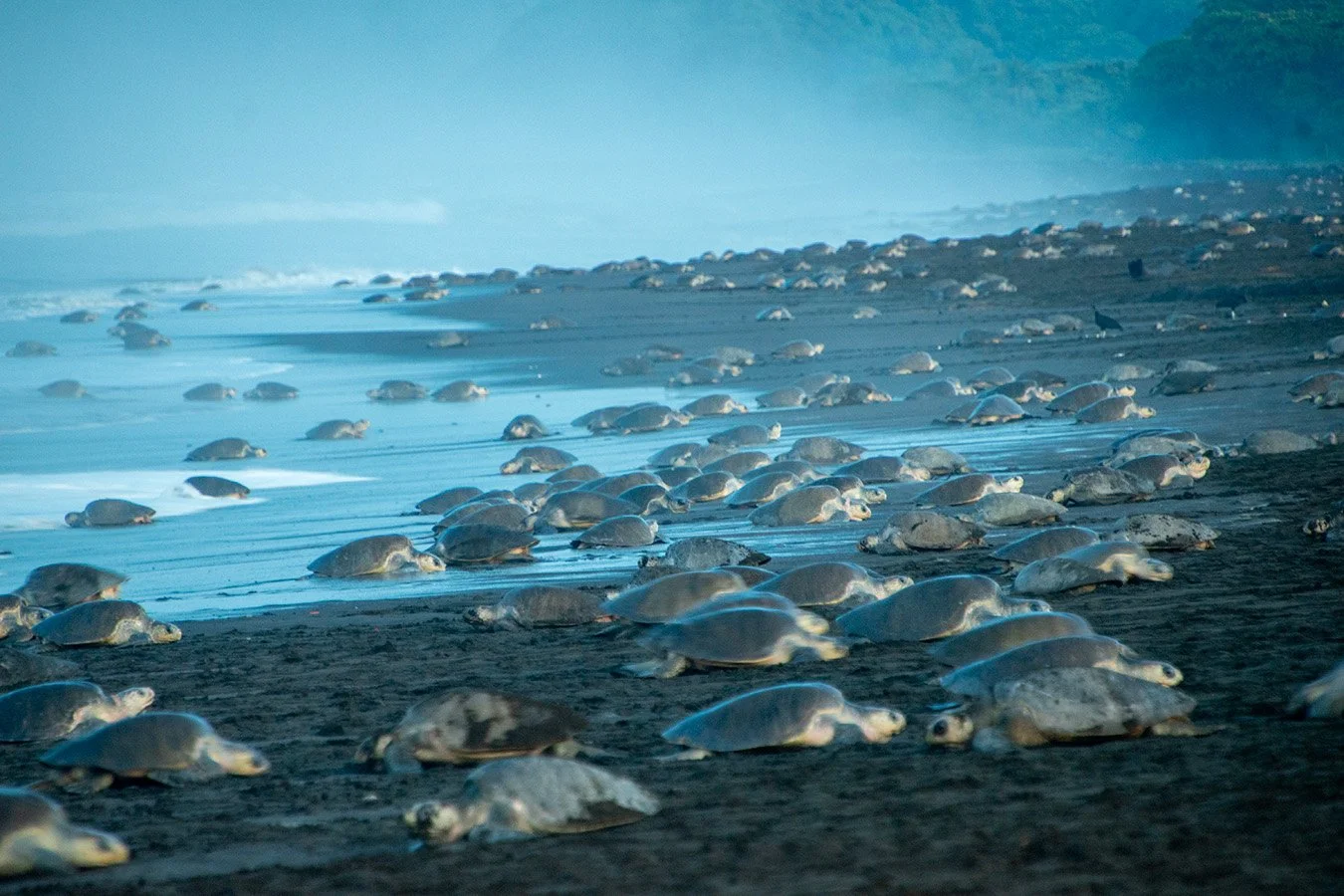
Living in Nosara means having the chance to wake up and witness one of nature’s greatest events: an arribada. This is when thousands of marine turtles come ashore at the same time to lay their eggs. I’ve been lucky to see a few arribadas over the years, and it’s safe to say they will never cease to amaze me.
All photos by Felipe López
Arribadas usually take place during our rainy season, with the biggest ones happening between July and November. The relatively cooler conditions at this time keep the mothers’ shells from overheating during their nesting process, which takes about an hour. Only two species of sea turtles in the world do this synchronized mass nesting, and for reasons still mysterious to us, the Olive Ridley turtles (Lepidochelys olivacea) chose nearby Ostional as one of their most important nesting sites.
Nosara’s coastline remains wild and free of oceanside development thanks to efforts to protect these beaches as critical habitat for the turtles. Guiones, Pelada, Nosara, and Ostional are all part of the Ostional Wildlife National Refuge, which safeguards the first 200 meters of land from the high-water line, as well as a broad area of the Pacific Ocean.
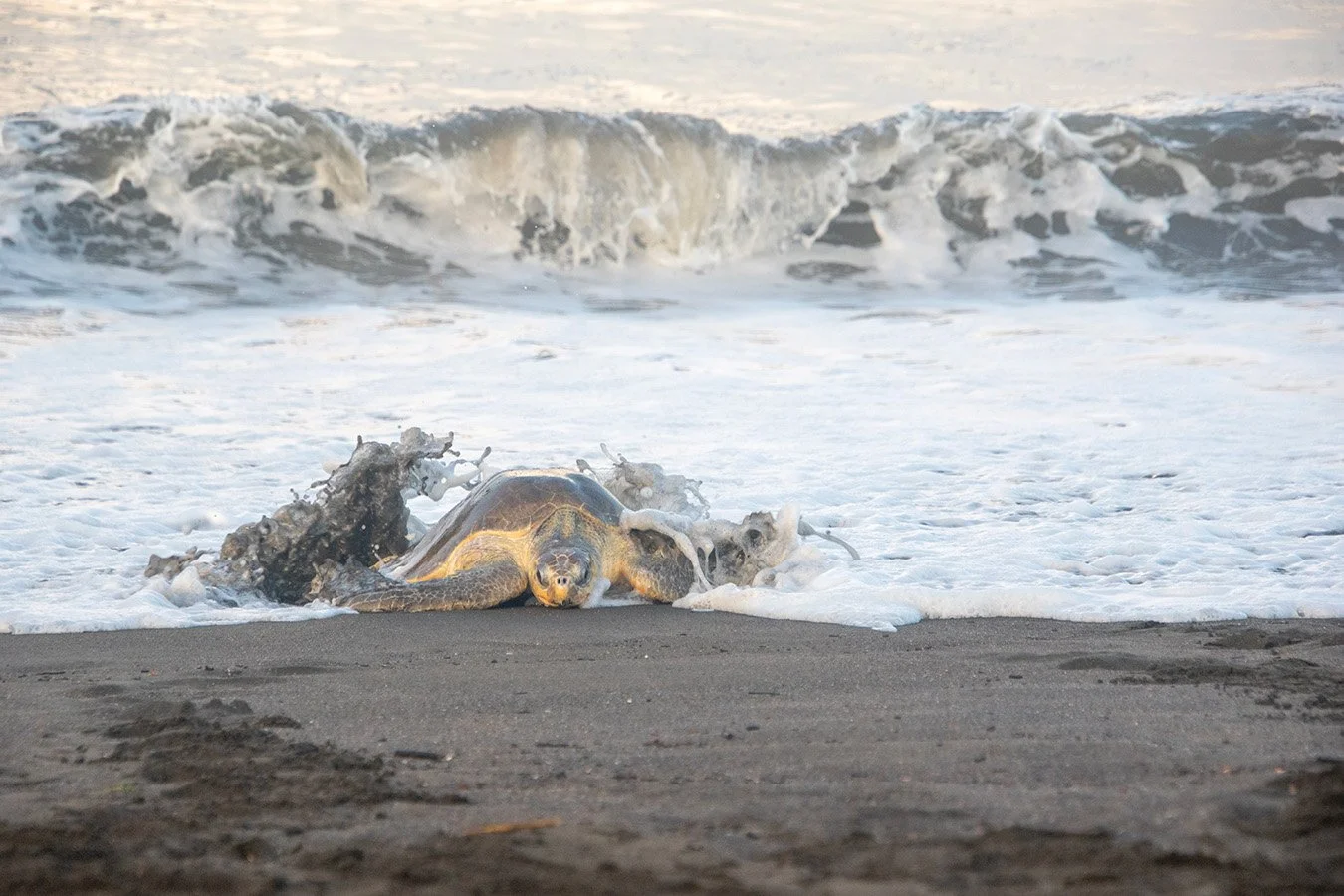
A few weeks ago, my nephew and his family came to visit, eager for the chance to see the turtles. We told the kids not to get their hopes up too high, but since it was the season, we called the refuge with our fingers crossed. Great news followed: an arribada was actually happening! We arranged for a guide (essential for reaching the nesting site), set our alarms for pre-dawn, and headed to the beach early the next morning.
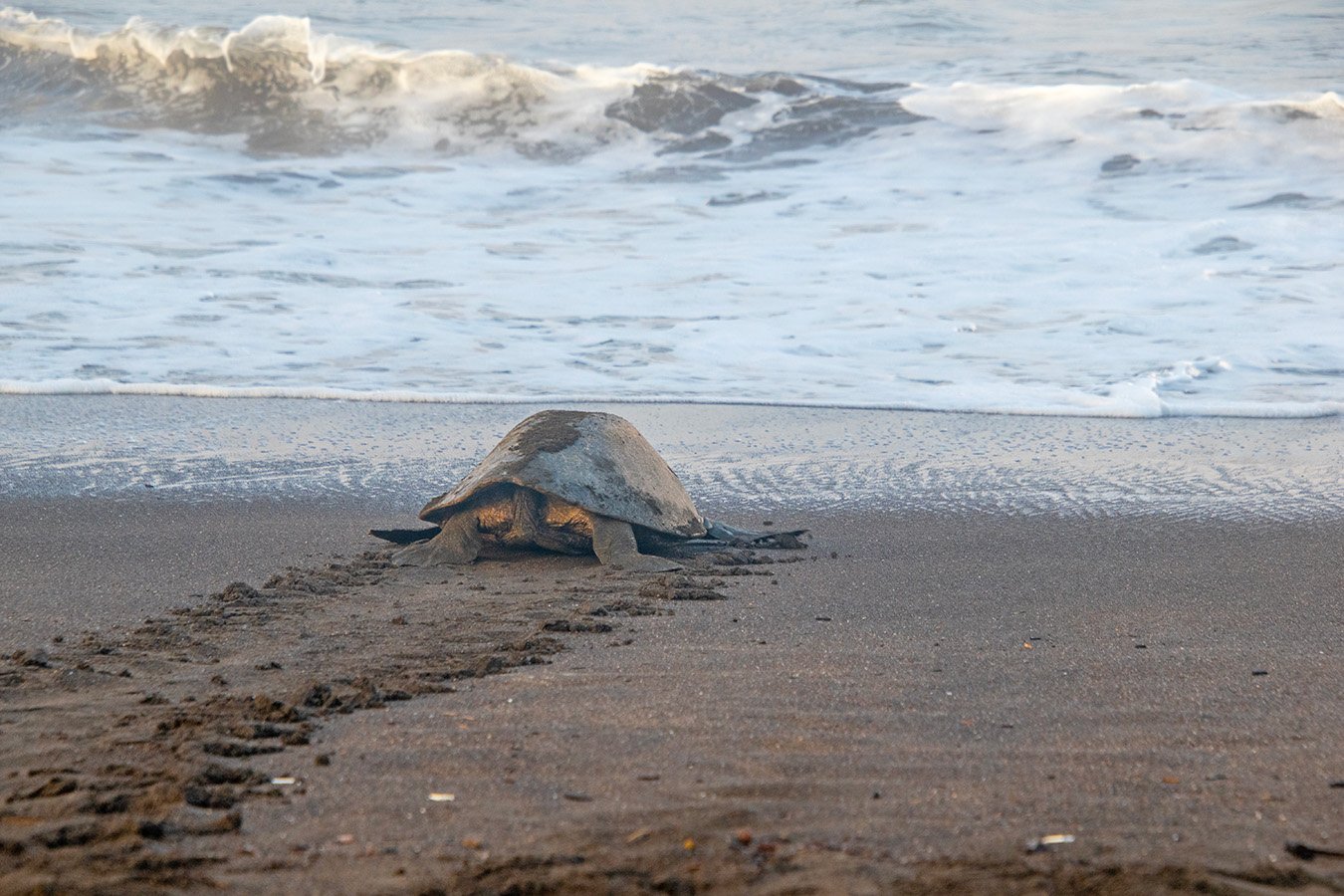
To watch thousands of turtles come ashore together is breathtaking. Each mother hauls herself from the waves, navigates the maze of fellow turtles, logs, and debris, digs patiently, lays her eggs, and carefully conceals the nest before returning to the sea. It’s a heroic and exhausting effort for these creatures.
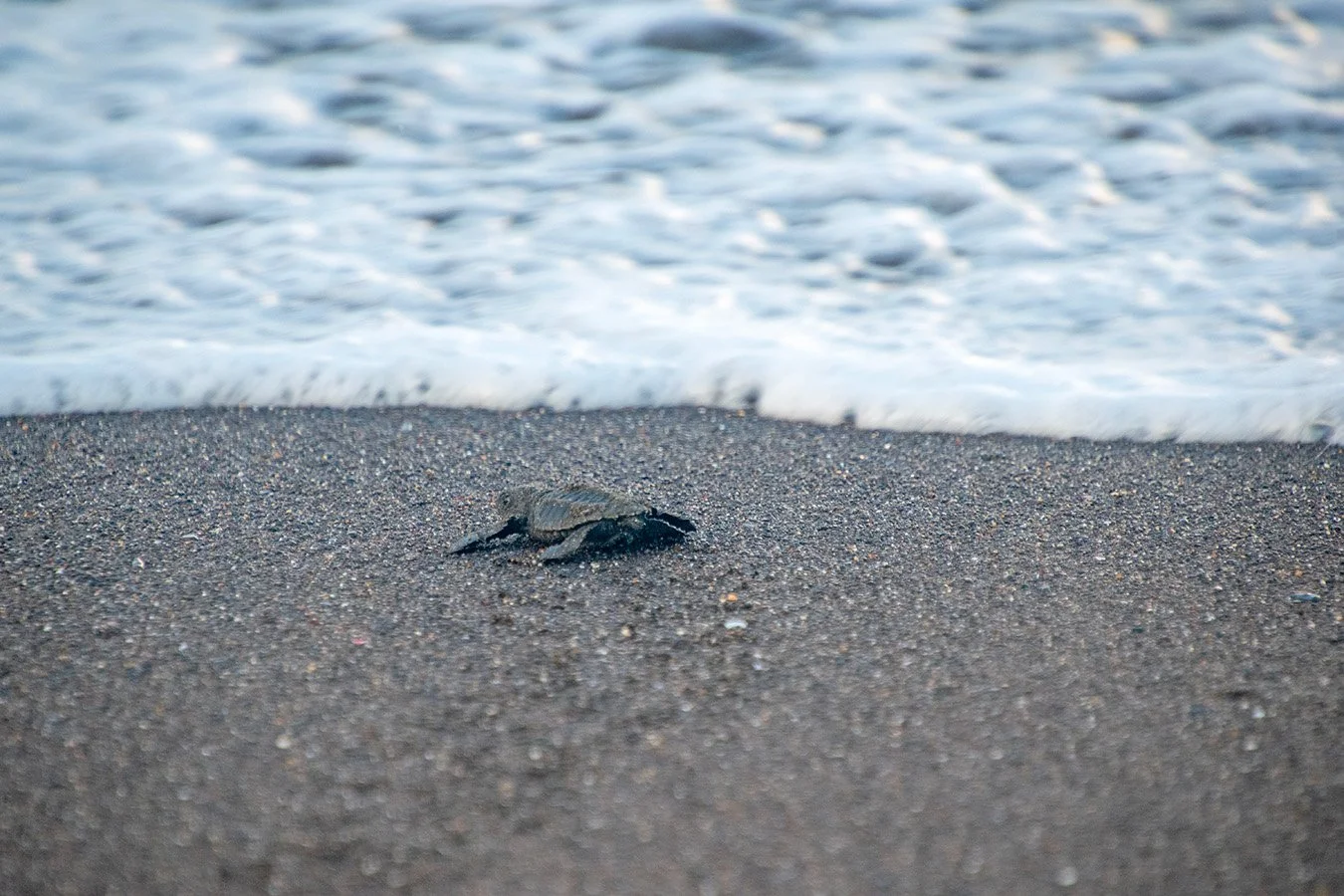
A few weeks later, the beach comes alive again. What first looks like shifting sand suddenly bursts into motion as dozens of tiny hatchlings push their way into the light for their first breath. Their journey to the sea is perilous—birds and crabs lie in wait—and as tempting as it is to lend them a helping hand, it’s important to let them make the trek themselves so they build the strength they’ll need to survive.
After spending the morning with these majestic animals, we left Ostional tired, happy, and full of awe for the natural magic that makes this place so special. If you’re hoping to see an arribada, please remember you must go with a certified guide and respect refuge guidelines. Our El Bosque team is always happy to share tips and answer questions to help you experience one for yourself!
Some Cool Facts About Turtles and Ostional:
Momma turtles prefer to come ashore from dusk until dawn to keep their shells cooler.
They can lay 80–120 eggs per nest.
The temperature of the sand determines the sex of the hatchlings—warmer sand produces more females.
Marine turtles spend their entire lives in the ocean, except for hatching and nesting (for females). Males never return to land.
Each arribada can last between 3–10 days.
There can be 7–14 nests per square meter.
It takes between 44–60 days for the babies to hatch.
The Ostional Wildlife Refuge covers over 1,156 acres of land, with an area 17 times larger extending into the ocean.
The largest arribada ever recorded in Ostional was in November 1995, when around 500,000 turtles nested in just a few days.
The first nestings were observed in the 1930s, but massive arribadas were first reported in the 1970s.
Leatherback (Dermochelys coriacea) and Green sea turtles (Chelonia mydas agassizii) can also be found nesting there.
No surfing is allowed in Ostional during arribadas.
With such a high density of nests—and many being accidentally uncovered by other turtles—an official partnership with the Ostional community allows for limited egg collection for commercial purposes. This small harvest provides a vital source of income for local residents and appears to increase the percentage of successful hatchlings.